 Reviews


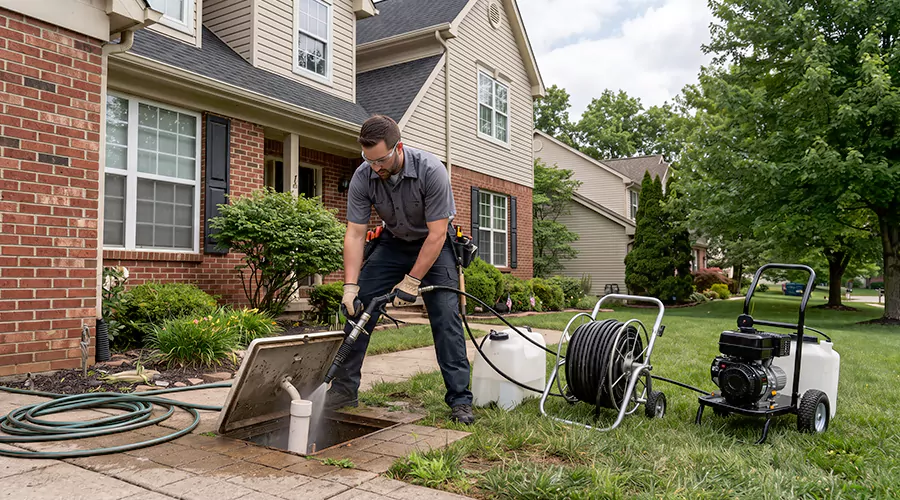
You can hydrojet your own pipes in limited cases, and an experienced DIYer can rent a 1,500 PSI water jetter for about $100 to $200 per day. Full-power work stays professional since hydro jetting with commercial equipment requires a skilled licensed plumber who knows how to use it safely.
The honest answer lives between those two sentences. Hydro jetting pipes at maintenance level is DIY-reachable, while jetting a failing sewer main blind is how cleanup bills get born.
This guide draws the line precisely so you know which side your project sits on.
What Hydro Jetting Actually Involves?
Hydro jetting means cleaning pipe walls with pressurized water rather than poking clogs with a cable. Professional equipment generates 1,500 to 4,000 PSI which cuts through tree roots and years of grease and mineral deposits. The machine is a pump and a hose and a clever nozzle.
The nozzle does the navigating. A plumbing water jet head blows through clogs with a forward-facing stream while backward-facing jets propel the head up the line. The operator feeds hose while physics does the crawling.
Flow matters as much as pressure. Pipe jetting at professional grade moves serious water volume, and a consumer pressure washer delivers only about half as much water as commercial-grade hydro jet machines. Pressure cuts the buildup while volume flushes it away, so half the flow means half the cleaning even at matching PSI.
The DIY Equipment That Exists
Three equipment tiers sit between a garden hose and a plumber's trailer. Each rents or sells openly. Knowing what each really is prevents the classic mismatch between tool and job.
- Pressure washer kits: A consumer pipe jetter kit threads onto your existing pressure washer, and 100-foot sewer jetter kits sell for $34 to $56 with premium versions near $180. The drain line jetter hose carries a mini nozzle with rear-facing jets just like the pro version.
- Rental jetters: Rental yards offer 1,500 PSI water jetters at $100 to $200 per day which covers genuine light-duty jetting.
- Trailer rigs: Tow-behind sewer jetters rent around $433 for a 3,000 PSI gas unit and $592 for a 4,000 PSI diesel. These are professional machines with professional consequences.
One rental completes any serious attempt. Rental yards also stock 200-foot video pipe cameras at $260 to $350 per day because jetting blind is the mistake every section below circles back to.
Insider tip: Check your pressure washer's GPM rating before buying any kit. Machines under 2 GPM push the nozzle fine and flush almost nothing.
What DIY Jetting Can Handle?
An honest DIY lane exists and it's wider than the pro marketing admits. Jetting drain lines for grease maintenance on healthy kitchen branches is the legitimate home use case. The keyword is maintenance rather than rescue.
The kit-friendly list runs like this. Kitchen branch lines with soft grease film respond well since water jetting pipe cleaning excels at exactly that soap-and-fat coating. Outdoor work suits the kits even better because jet cleaning pipes like culverts and downspout drains and yard drains carries no sewage risk and no wall damage risk. Washing machine standpipes and floor drain branches round out the safe roster.
Three conditions gate every entry on that list. The pipe must be modern and sound. The line must have easy access through a cleanout. And the goal must be cleaning buildup rather than defeating a total blockage.
Insider tip: Run the kit through a fully flowing line first as practice. Learning the feel of the hose on a healthy pipe beats learning it during a backup.
Where DIY Jetting Goes Wrong?
The failure stories share one plot. Jetting sewer line clogs blind against unknown pipe conditions turns cleaning pressure into demolition pressure. Four specific risks fill out the plot.
- Old pipe shatters: Homes with older, delicate sewer pipes may not benefit from hydro jetting at all, and hydro jetting drain pipes made of aging clay or Orangeburg can collapse them. Inspecting the pipe's condition and type before jetting is critical to prevent damage.
- The blockage wins anyway: A total obstruction can send everything backward, and one homeowner's attempt to jet clean a sewer line blockage ended with sewage backing up through multiple drains and a cleanup costing more than professional jetting would have.
- The diagnosis never happens: DIY pipe hydro jetting fails on the thinking side more than the spraying side since a root mass and a collapsed section feel identical from the cleanout.
- The operator gets hurt: High-pressure water injures skin and eyes, and a hose under thousands of PSI whips when mishandled.
The pattern reduces to one sentence. DIY jetting is safe on pipes you know and dangerous on pipes you're guessing about.
The Rental Math
Renting real equipment rarely pencils out the way it promises. Rental for anything comparable to professional gear runs $200 to $300 per day for less powerful equipment. Stack the true costs before booking the trailer.
Count the whole basket. The jetter rental plus the camera rental plus a weekend of learning approaches professional pricing fast, and hydro jetting a residential sewer line professionally costs $700 to $1,100 with a national average around $700. Lighter jobs undercut the rental even harder since quick and easy professional jobs cost as little as $150 with a national range of $200 to $550.
The equipment gap explains the rest. Professional rigs cost thousands of dollars and require specific training to operate safely, which is why a hydro jetter plumbing setup on a truck outperforms anything at the rental counter.
DIY vs Professional Costs in 2026
The money question deserves one clean table. DIY wins on maintenance and loses on rescue. Every 2026 number below assumes the job matches the tool.
| Approach | 2026 cost | Right job |
|---|---|---|
| Pressure washer kit | $34 to $180 once | Grease maintenance and yard drains |
| Light rental jetter | $100 to $200 per day | Healthy accessible lines |
| Camera rental | $260 to $350 per day | Required for any sewer attempt |
| Pro fixture-level jetting | $150 to $550 | Stubborn branch clogs |
| Pro main line jetting | $300 to $1,100 | Sewer clogs and roots |
Longevity favors the pros too. Professional hydro jet pipe cleaning results last 2 to 3 years against 3 to 6 months for snaking on chronic clogs, and a full hydro flush sewer line service includes the camera verification a rental weekend usually skips.
Insider tip: Ask pros for their camera footage before and after. The video is proof of value that no rental receipt provides.
Safety Rules If You Try It
The maintenance lane comes with a non-negotiable rulebook. Eight rules cover the injuries and the floods. Break none of them.
- Camera first on any sewer line. No footage means no jetting.
- Feed through a cleanout only. Never jet through a toilet or fixture.
- Start the pressure low and step up only as the line proves sound.
- Keep the nozzle moving. A parked jet cuts at whatever it faces.
- Never point the hose at anyone and never withdraw it under pressure.
- Wear eye protection and waterproof gloves for every minute of the job.
- Stop at the first resistance that won't yield. Hard stops mean structural problems.
- Know your pipe material. PVC tolerates the kits, while old clay and fiber pipe may not.
One more rule outranks the eight. Standing sewage anywhere in the house ends the DIY attempt before it starts.
When the Professional Is the Only Answer?
Five findings take this job out of homeowner hands regardless of equipment access. Each one means the clog is a symptom rather than the disease. Pros jet cleaning sewer lines bring the diagnosis alongside the pressure.
- Multiple fixtures backing up at once: Multiple slow drains with gurgling or foul odors signal a main sewer clog that deserves professional handling.
- Known or suspected tree roots: Root cutting needs the right nozzle and a regrowth plan.
- A clog that returned within months: Recurrence means the pipe needs inspection rather than a third cleaning.
- Pre-1980 pipe materials: Age moves the damage risk from possible to likely.
- Any previous failed DIY attempt: Plunging or snaking severe blockages can push them deeper into the line and the next attempt starts worse.
The license matters beyond skill too since insured professionals own the outcome when a marginal pipe fails mid-job.
Conclusion
You can hydrojet your own pipes when the job is maintenance on sound, accessible lines and the tool is matched to it. Rescue jetting on unknown sewer pipe belongs to insured professionals with cameras. The rental math usually agrees with them. This week, find your cleanout and note your pipe material and age. Those two facts answer this article's title for your specific house better than any general rule can.
FAQs
Will a garden hose jetter attachment clear a clog?
No. Hose-end sprayers lack both the pressure and the flow, and real kits require a pressure washer behind them.
Can I jet through my roof vent instead of a cleanout?
Avoid it. Vent jetting risks the hose kinking at the fittings and drops debris straight into the trap arms.
What PSI is safe for PVC drain lines?
Sound PVC tolerates light-duty jetting fine. Keep consumer work at pressure-washer levels and let pros calibrate anything higher.
How often should I jet a grease-prone kitchen line?
Two or three maintenance passes a year keeps a healthy branch clear. More often than that means fix the grease habits.
Do the cheap kits actually work?
For soft buildup in small lines, yes. Reviews cluster low mostly from buyers who aimed them at jobs needing trailers.
Is jetting safe on a septic system?
Yes for the house-side lines with care taken near the tank inlet. Tell any pro you're on septic before work starts.